
Small shops, big differences: who gains from the business rates giveaway?
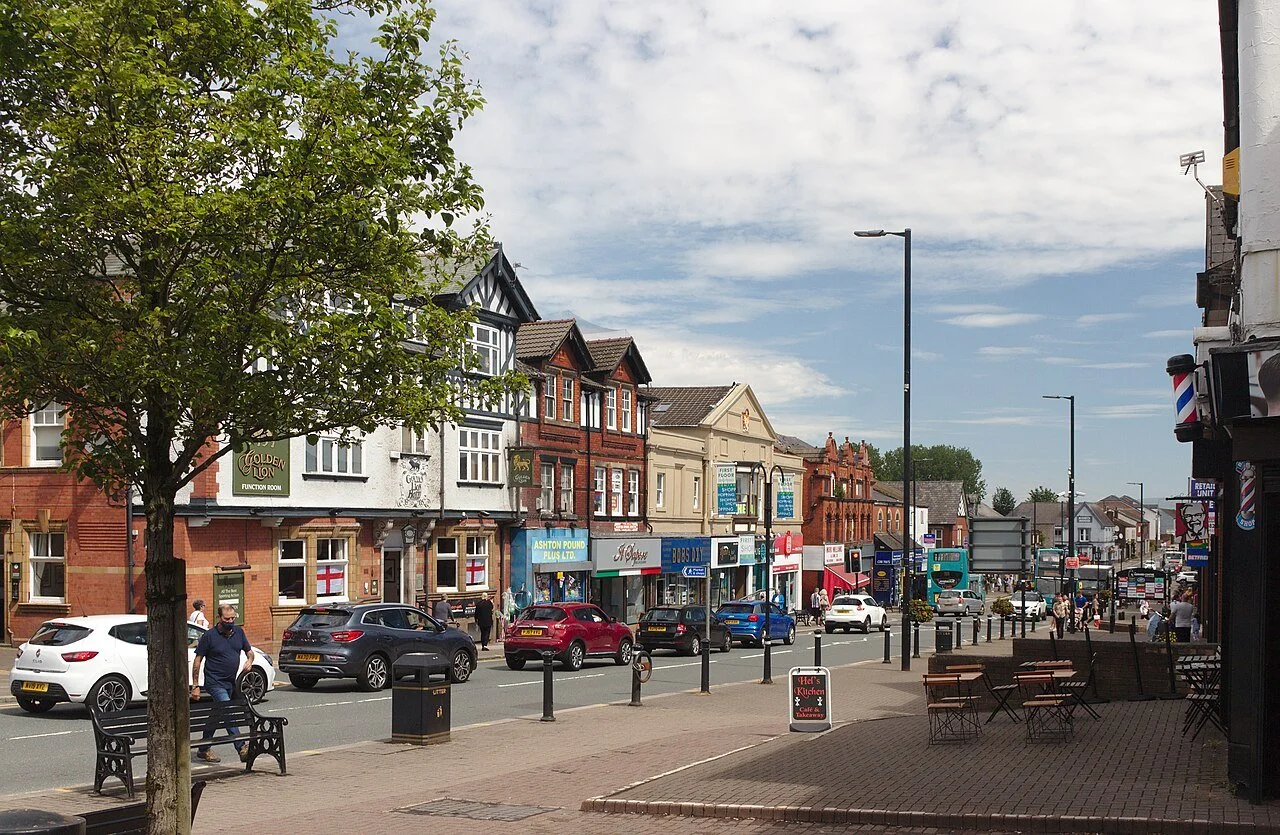
Gerard Street, Ashton-in-Makerfield. Credit: Phil Nash from Wikimedia Commons
James Meadway
In an otherwise notably leak-free pre-Budget period, the Sunday Times reported that Chancellor John Healey is expected to raise the point at which small firms start paying business rates. Both he and the Prime Minister reportedly want to frame the entire fiscal event around supporting Britain’s smaller businesses – and taking on the multinationals as needed, if reports of online shopping tax rises are to be believed.
Business rates are the local taxes that businesses have to pay. At present, a small business in a property whose “rateable value” (assessed as something like its annual rent) is under £12,000 pays nothing, with relief tapering away at £15,000. The Sunday Times reports that the Budget will lift the no-tax threshold to £18,000, and that the relief would taper away to a £21,000 rateable value, after which the full amount is due. Only businesses in England will be affected, as business rates are a devolved matter – Scotland, Wales and Northern Ireland run their own systems.
The tax firm Ryan, quoted in the Sunday Times report, estimates that 75,000 properties would stop paying business rates altogether, including 39,000 shops, 2,600 pubs and 2,000 hairdressers and beauty salons, at a cost of about £460 million a year.
Who benefits?
The effects of this are uneven, and quite strongly determined by property prices which determine those rateable values. Using the Valuation Office’s latest rating list, and scaling this to Ryan’s national figures, we can estimate how many businesses are affected in each council. The map below shows how many would be lifted out of business rates, per 1,000 businesses, in each council area.
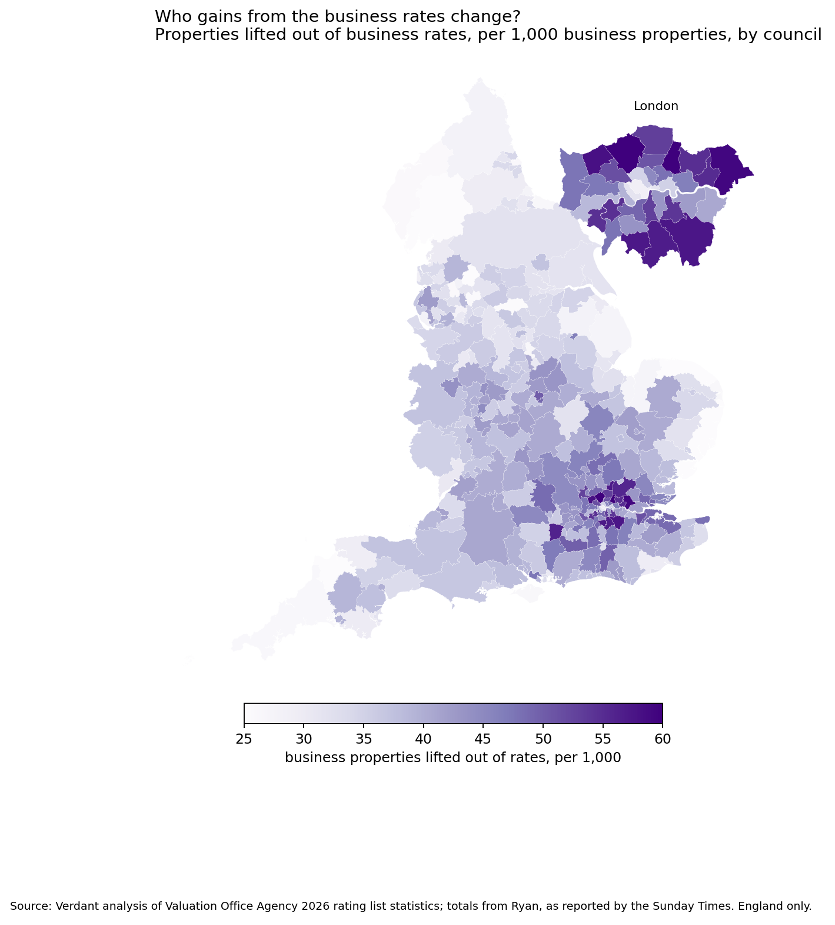
The biggest gains are in outer London and the commuter belt. Waltham Forest would see 68 properties lifted out for every 1,000, Barnet 62, and Havering, Harrow, Bromley and Croydon around 57 to 59. At the other end are Burnley (20 per 1,000), Tendring (21) and North Norfolk (23).
Where rateable values are low, most small shops are already assessed as less than £12,000 and already pay nothing, so raising the threshold changes little. Two in three business properties in the North East already fall below the current threshold, against fewer than two in five in London. As a result, London would receive about £90 million of the £460 million, a fifth of the total, and the North East about £17 million. Strikingly, if perhaps predictably, this is a measure that mostly benefits London and the South East.
The Makerfield test and “growth in every postcode”
Winning the Makerfield by-election in June, Andy Burnham promised a “Makerfield test” at the heart of British politics, that would “ensure the places Westminster has neglected will now get fairness”. It’s never been very clear what this might mean in practice, but we can see how well the PM’s own constituency might do from the change.
Similarly, the government has repeatedly promised to promote “growth in every postcode”. This is more specific, but economic growth is one of the most vexed questions in economics. Where precisely it comes from and who benefits are permanent, unsettled disputes – along with the criticism of whether it is worthwhile goal in any case. We can’t quickly estimate the local growth effects from this change, but we can at least try and show more specifically where the beneficiaries might be.
To draw the map, we took official counts of business properties for each neighbourhood, spread them across postcodes according to where shops, pubs and cafés are mapped on OpenStreetMap, and matched the total to our figure for Wigan. The results are estimates of where benefiting businesses trade.
Makerfield overall is a small gainer. We estimate about 70 properties lifted out of rates, worth around £414,000 a year to local businesses. That is roughly 32 for every 1,000 business properties, below the English average of 37. Wigan as a whole ranks 193rd of 296 councils, or in the bottom third of gainers. As elsewhere in the North, many of Makerfield's small shops already pay nothing.
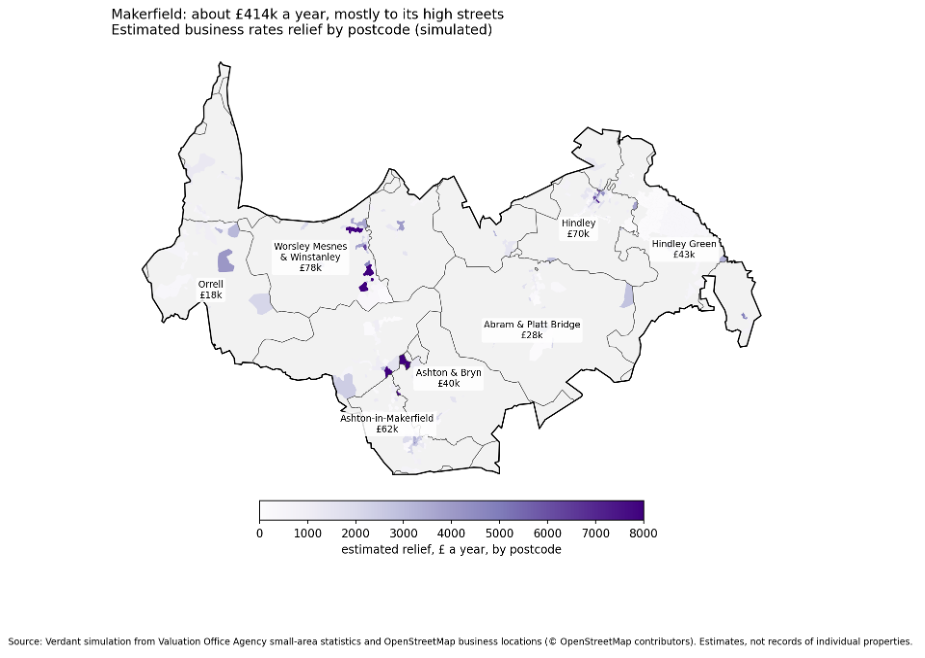
Where the money does go, it goes to the high streets: about £78,000 a year around Worsley Mesnes and Winstanley, £70,000 in Hindley, and around £100,000 across Ashton-in-Makerfield and Bryn.