
The El Niño in the room
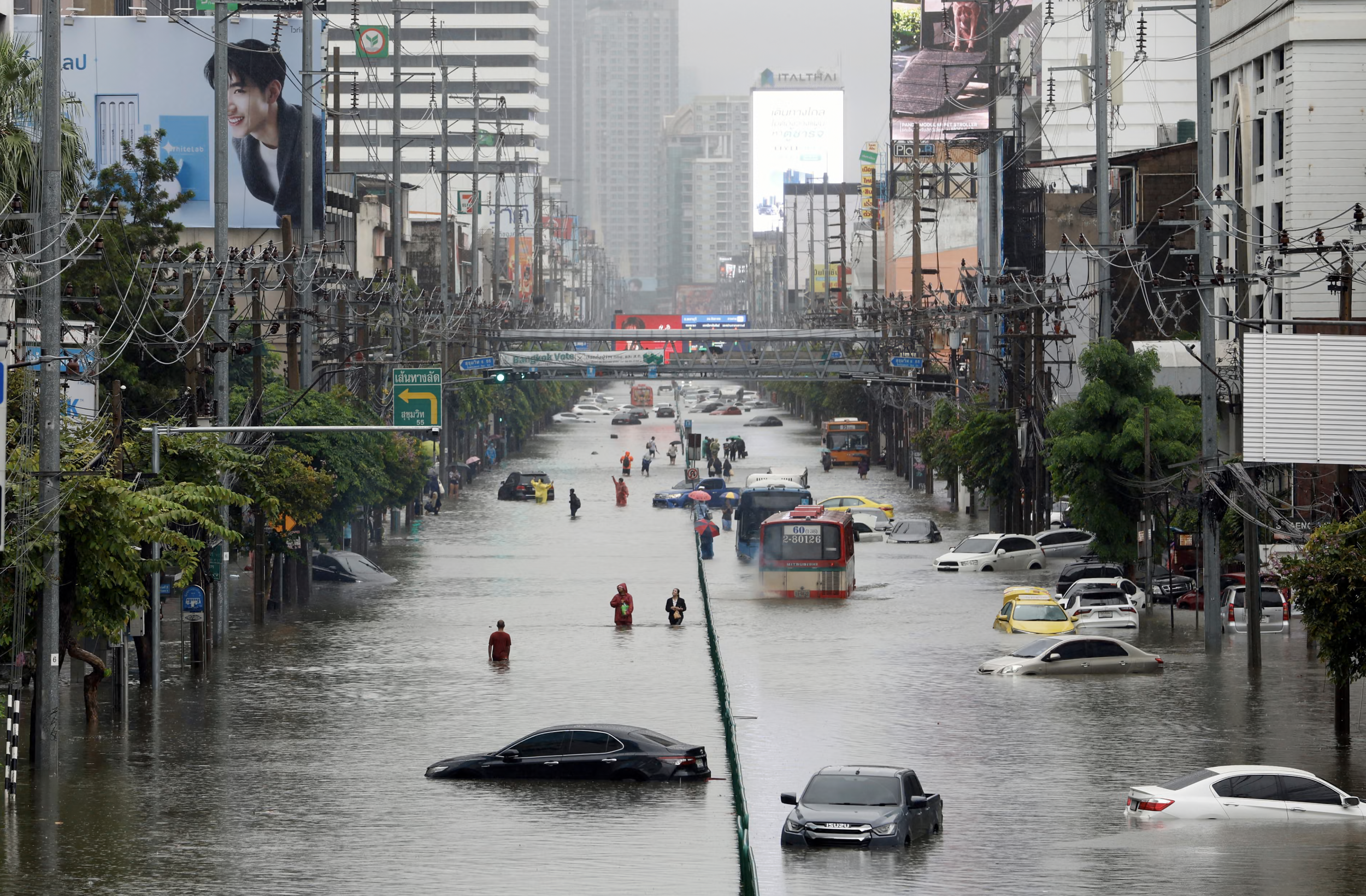
Bangkok floods 2026, photo credit: Rungroj Yongrit/EPA
James Meadway
The International Monetary Fund (IMF) and World Bank’s annual joint meeting is finishing today in Bangkok, a city that just weeks before the international bureaucrats’ arrival had been hit by its worst floods in 15 years. The city declared a state of emergency and across Thailand, torrential rains killed 44 people. Streets are still being cleared of debris as the meetings wrap up.
Severe storms have been worsening over time in South-East Asia: the IPCC expects heavy rainfall in the region to become more intense and more frequent as the world warms, and while the number of tropical cyclones shows no clear trend, more of them have been extreme. El Niño is reckoned to complicate the picture. It usually brings drier than average conditions to much of the region, raising the risk of drought and poor harvests; but the World Meteorological Organization warns that a strong El Niño raises the odds of extreme weather on top of the trend from climate change, and research on the region's rainfall has linked its extremes to both global temperatures and El Niño.
And this year’s El Nino is now amongst the strongest on record. Surface water temperatures in the eastern Pacific, a marker for its arrival, are soaring far above recent norms. AP reports that this likely record-breaking El Niño is already fuelling wildfires in Indonesia, draining reservoirs and hurting fish catches across South-East Asia, on top of the energy and fertiliser shock from the Iran war, and warns that losses of rice and palm oil in the region could push up food prices and worsen hunger worldwide. Meanwhile, the drumbeat of climate change, over which El Nino is playing out, grows ever-louder.
Barely a peep of this made it into the IMF’s flagship World Economic Outlook report, released at the joint meetings in Bangkok on Tuesday this week. The fund is now flagging that it expects inflation globally to rise, from 4.1% last year to 4.7% in 2026, as a result of energy and food price increases. What's striking, however, is how the Fund divides up the blame. It does note the massive AI investment as introducing more inflationary pressures across the world, describing it as a large, front-loaded surge in demand running into capacity limits in chips, data centres, electricity and construction. It even includes a whole chapter on cost-of-living crises.
But climate change barely registers as a contributor to either. It appears only in passing, as one of several pressures on government budgets and one of the forces behind what the Fund calls a more shock-prone world. El Niño gets a single paragraph, in the list of downside risks to the global economy, which warns that flooding, drought and water stress “exacerbated by the ongoing El Niño episode” could further disrupt commodity markets.
Meanwhile, the IMF's Global Financial Stability Report, published the same day, manages not even that peep. Its main risk chapter names three threats that could set off market turmoil: a correction in AI-linked assets, a sharp rise in government bond yields, and cyber attacks. El Niño, climate change and extreme weather are not mentioned at all. The IMF's global bank stress test combines an AI correction with bond market disruption and an energy supply shock, but no physical climate shock; and insurers appear only as holders of increasingly illiquid assets, not as firms that might face a wave of claims.
This is something of a recurring theme. On Tuesday, I went to a presentation by the Resolution Foundation, a London-based think tank that produces a broad range of economics work, including its own assessments of what the Office for Budget Responsibility's forecasts are likely to show when the Chancellor, John Healey, delivers his Budget on 28 October. Its pre-Budget briefing estimates that the Chancellor's “headroom” against his main fiscal rule has halved, from £24 billion to around £12 billion, mostly because higher borrowing costs have pushed up debt interest. This headroom is a measure of by how much the forecaster expects the government to be above the maximum amount of borrowing the fiscal rule would allow. The bigger it is, the more space the government is assumed to have to meet unexpected events. Quite strikingly, neither El Niño next year nor the creeping effects of climate change feature in Resolution Foundations projections for the future.
Yet it would not take much for a reasonably bad year from either, or more likely both in unison, to significantly disrupt the government's own plans for spending and borrowing: for instance, through the imapcts of inflation worsening cost pressures across government, and pushing up spending on various social security payments, like pensions, which rise with prices. With only around £12 billion of headroom, there is not much space for these sorts of shocks.
There's still a serious mismatch between climate change identified as a long-term problem, which all the serious agencies now accept, and climate change as an actually present issue today. El Niño makes that mismatch especially stark, because it is one of the few climate shocks that forecasters can see coming months in advance. The warnings are there; they are just not making it into the numbers.