
Press Release: Summer 2026 heatwaves have already cost the UK economy £4.4bn, new research finds
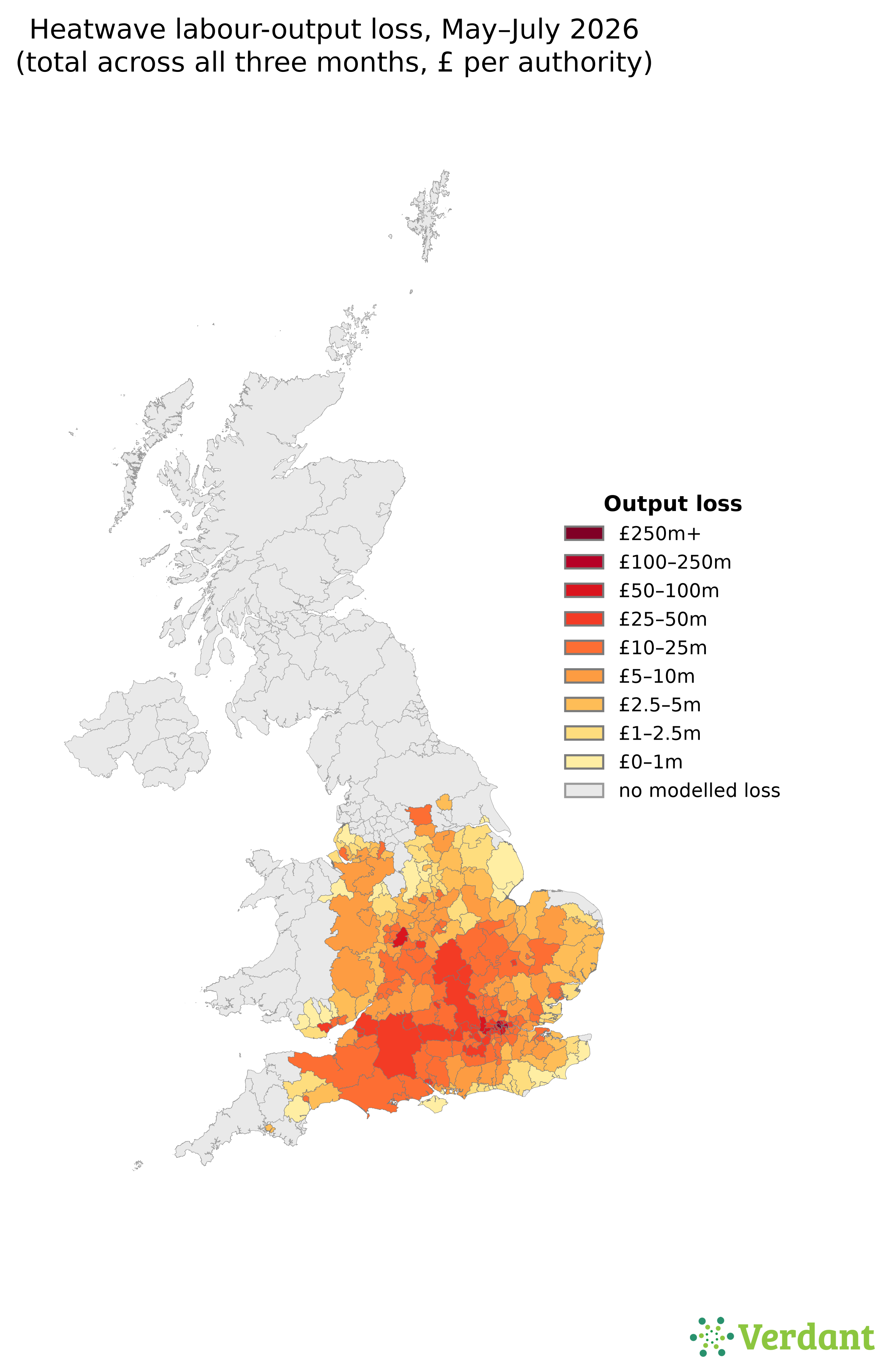
Heatwave labour-output loss, May to July 2026 (total across all three months, £ per authority) Credit: Verdant
PRESS RELEASE: FOR IMMEDIATE USE
NEW RESEARCH SHOWS COST OF JUNE 2026 HEATWAVE AT LEAST £2.4bn
Losses set to reach £25.6bn by 2030 without action on climate adaptation
The UK’s four heatwaves this summer have cost the economy at least £4.4 billion in lost output, according to new analysis published today by the progressive think tank Verdant. Without new policy action, Verdant projects that cumulative losses of this kind will reach £25.6 billion by 2030 as heatwaves continue to intensify.
The research, an update to Verdant’s earlier estimate of the cost of the June heatwave alone, covers all four of this summer’s heatwaves, in May, June and July, and finds:
May’s heatwave cost the economy £510 million;
June’s more severe heatwave, which broke UK temperature records, cost £2.36 billion;
July’s heatwave, though less intense, still cost £1.5 billion;
Losses are concentrated in the South-East: the City of London, Westminster and Tower Hamlets recorded the largest local economic hits.
Verdant’s analysis is based on Met Office HadUK-Grid temperature data mapped to all 379 UK local authorities, combined with hours worked and gross value added in each area, and applied to the empirical finding, from research by insurers Allianz, that European economies see a 3% fall in output per hour for every degree Celsius above 30°C. It confirms research by LSE’s Grantham Institute that identified £1.1bn of losses from reduced working hours only during the UK’s June heatwave.
“The economic costs of climate change are already with us, and set to worsen in future years. Action by government to protect workers and businesses from the severe effects of extreme heat is well overdue.” Dr. James Meadway, Verdant Co-Director and report author
The report sets out three policy recommendations to reduce these losses and protect workers: a national maximum working temperature, as already implemented in Spain and Belgium and recommended by the Climate Change Committee; a novel national heat insurance scheme to protect the incomes of workers unable to work during heatwaves; and increased investment in cooling and urban redesign, including greening urban spaces, to reduce the impact of extreme heat itself.
Verdant’s analysis follows a recent Climate Change Committee assessment which found that UK adaptation to climate change is “either too slow, has stalled, or is heading in the wrong direction”, and that government action has been “not fit for purpose”.
ENDS
For further comment, contact James Meadway: james@verdantthinking.org / 07894953555
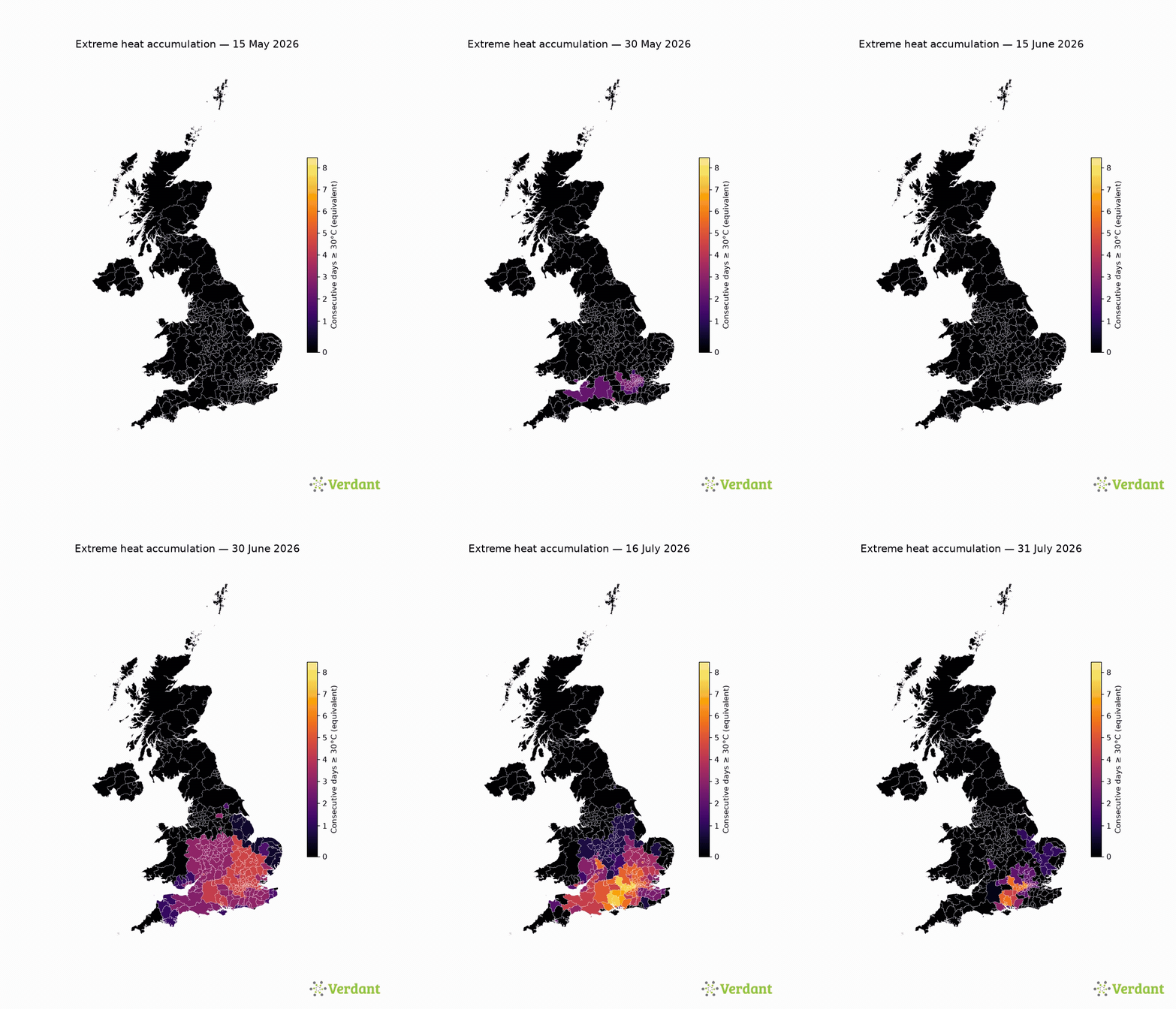
Extreme heat accumulation, May 15 - July 31, 2026. Credit: Verdant
NOTES:
About the research
Verdant’s estimates are based on Met Office HadUK-Grid gridded daily temperature data (1km resolution) matched to all 379 UK local authorities, combined with local hours worked and gross value added (ONS), and applied to the productivity–temperature relationship identified by Allianz Research in Too Hot to Grow: the economic costs of extreme heat (28 May 2026). The £4.4bn figure covers direct productivity losses only, and excludes losses from wildfires, higher energy costs to businesses and households, and wider macroeconomic effects. Full methodology, references and the complete dataset are available in Verdant’s report, The Cost of Heat: Summer 2026 UK heatwaves — an economic impact update.
Key figures
£4.4bn: total estimated productivity loss from the May, June and July 2026 heatwaves combined
£25.6bn: projected cumulative productivity loss from summer heatwaves by 2030, if heatwaves continue to intensify at the pace of the last decade
£1.15bn: separately estimated cost of lost hours and reduced effort only during the June heatwave alone, from a Grantham Research Institute (LSE) survey of nearly 2,000 UK workers
3%: the fall in output per hour for every 1°C above 30°C, from Allianz research
About Verdant
Verdant is a political independent think tank committed to a just and sustainable future, launched in March 2026. http://www.verdantthinking.org