
The Price of Heat: What June 2026 cost the UK
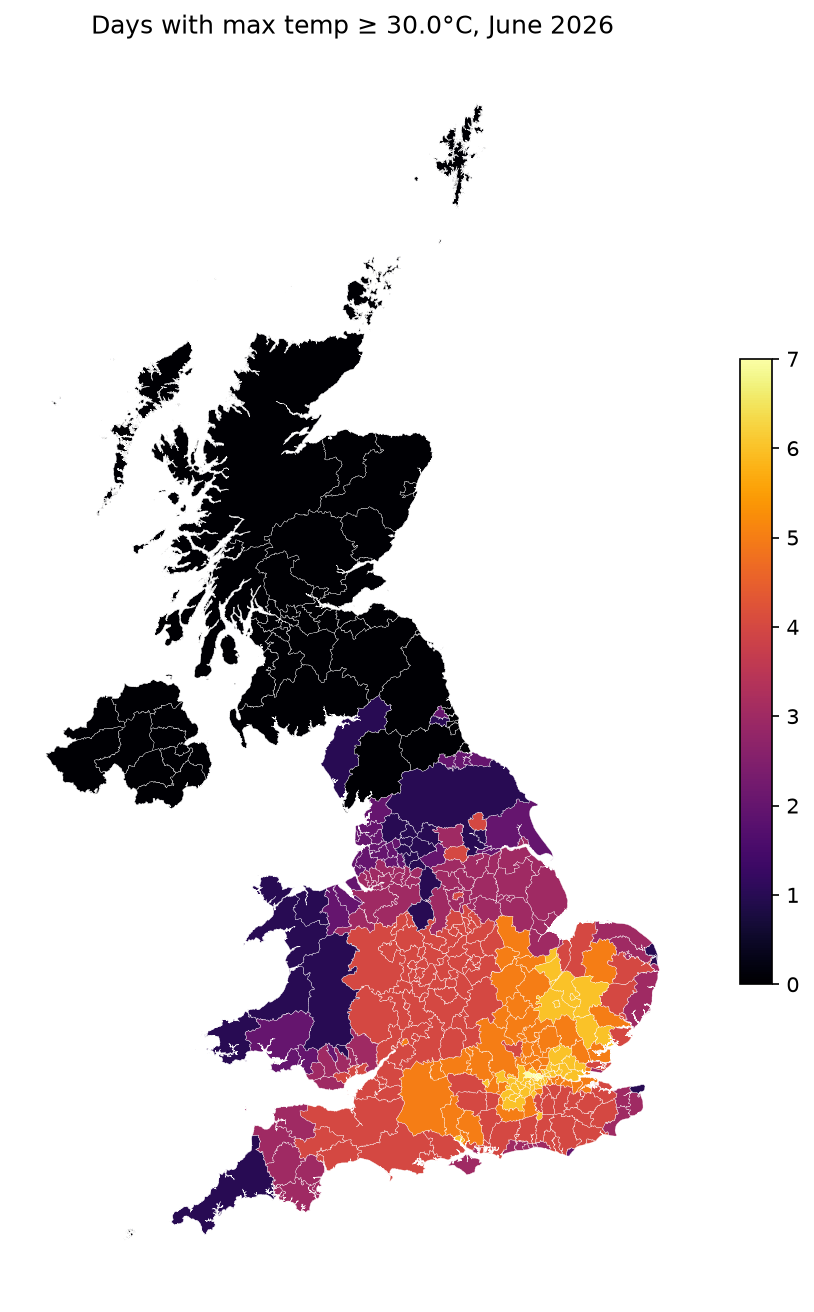
June 2026’s record-breaking heatwave, which saw temperatures top 37 degrees in parts of the country, has had an estimated, direct economic cost of at least £2.36bn. This is the result of reduced productivity due to the well-documented effect of all work becoming harder at higher temperatures, and that infrastructure and equipment overheat and fail. For each one degree Celsius temperature increase above 30 degrees in Europe, a 3% reduction in average output per hour has been observed. In a prolonged heatwave, these impacts add up to become significant economic losses. This is only the direct economic cost from productivity losses, and excludes the knock-on effects of increased energy demand, for example.
If heatwaves continue to worsen at the same pace as the previous decade, we should expect cumulative losses from each summers’ heatwaves of at least £25bn by 2030. This is likely to be an underestimate of their true cost, since it is recording only the direct impact on productivity. Further impacts on the costs and supplies of electricity, and the wider macroeconomic effects will add to this baseline cost. We are, in addition, not counting the dreadful human cost in health and mortality.
To reduce the economic losses of heatwaves, and to better protect those in work, we recommend a national maximum working temperature; the introduction of national heat insurance to protect incomes of those unable to work during heatwaves; and investment in active cooling and urban redesign, including greening urban spaces, to reduce the impact of extreme heat itself.