
Party conferences 2026: two headlines and what lies beneath
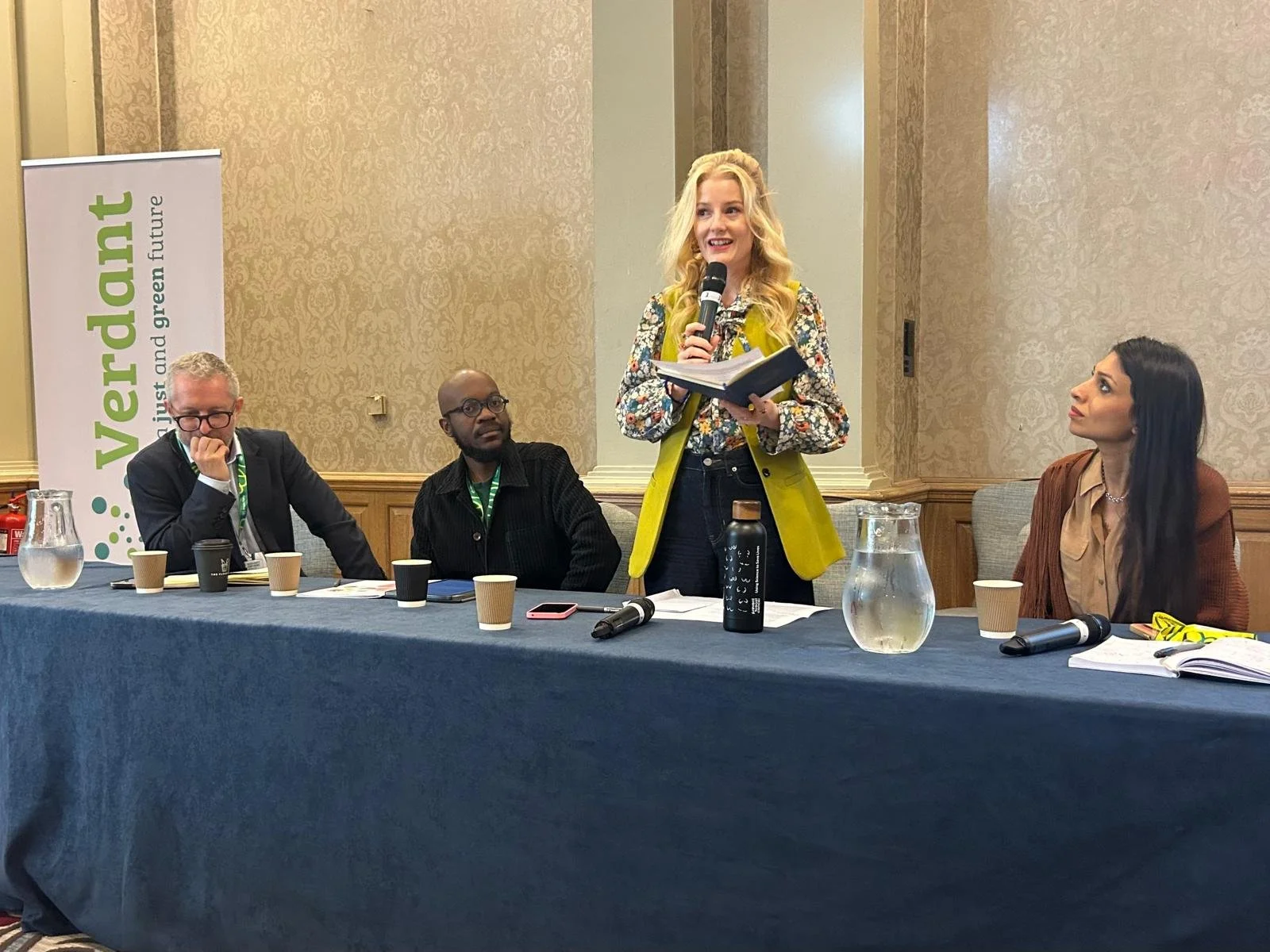
Verdant’s Green Party fringe on “Ideas to Win” with Hannah Spencer MP, Faiza Shaheen, Martin Edobor and James Meadway
Deborah Doane
Verdant was at both the Labour and Green party conferences in the past two weeks and, in spite of what you might be reading, both were incredibly buoyant about the future.
And whilst Labour came out brimming with energy from the success of their conference, the Greens are now scrambling to reclaim any sense of direction following the policy vote equating Zionism with Racism.
This is a tragedy, not just because of the subject itself. The irony is that beneath the headlines (“Great Speech, Andy!”; “Green party bubble has burst”), there is finally a recognition across the progressive left to tackle issues that had seemed, until now, insurmountable: inequality and climate change, enabled by the neoliberalism and deregulation of the last few decades.
Labour
Around the conference, the blue suits raced from fringe event to karaoke session, talking about everything from revisiting the welfare state, to new foreign policy. Hundreds of fringe events competed with each other for a share of the oxygen and a feeling of both relief and excitement, a view that finally, we have someone in government who will listen. Verdant was amongst them, hosting an event on food price rises and the cost of living, and being invited to engage in multiple other discussions and debates.
Burnham’s now-famous speech topped it off, hailed by many as one of the most memorable from a British political leader in recent times. Countless articles and podcasts have been reviewing and fawning over its contents and delivery to endless aplomb ever since. Amongst the many ideas he managed to pack into a 45-minute self-written speech, he acknowledged the problems with our social care system and pledged to pay for reform by ending the triple lock; he openly acknowledged that Brexit was a mistake; he even went so far as to acknowledge the need to address our unequal and out-of-date voting system. In the room where I was watching it, outside the main venue, the mood was palpable – smiles, happy tears even. Frequent rounds of applause.
Labour insiders left conference riding a wave of possibility, with limited scrutiny of what was obviously missing. There was almost a complete absence of the challenges of climate change – no mention of the summer’s wildfires at all, even though climate change impacts will derail most of the plans put on the table. The pledge for increased spending on defence received no real scrutiny and most of us were quietly sceptical that the October 28th budget will make headway on the country’s finances.
James Meadway has run some scenarios about how cutting the triple lock helps to finance the national social care plan. In short – it doesn’t. At least not until 2047.
Greens
This was the largest conference the Green party had ever hosted. Over 3000 people were registered to attend, with the party moving the conference from Bournemouth to Brighton to accommodate the recent growth in numbers. Also for the first time ever, the corporate lobbyists were out in force, seeing the increase in Green influence, both at the local at national levels.
The conversation in the Fringe events was rich – from funding devolution and public transport; to how to address adaptation in a rapidly changing climate; and real answers to the rising cost of living. Verdant had a solid presence, with our fringe meetings (and karaoke) packed to the rafters, and both James and I speaking on different panels. Officially, the Greens voted on progressive ideas from defending the Rights of Nature and recognising that it’s a national security issue, to capping prices on essential foods. Water nationalisation and rent controls were both on the agenda. They also faced up to more challenging issues – like how to accept existing nuclear power (vs. new nuclear) could be part of mix to rapidly transition our energy system.
The Greens had more practical and ambitious policies than the superficial presentation of Labour. But the irony was that all of the good that was discussed was overshadowed by one vote, which passed with fewer than a half a percent of the members on the final day. And many left the conference with their head in their hands, feeling as if the rug had been pulled out from under them.
Going forward?
Whether its green or red (or even blue and yellow) that manages to cut through in the coming months and years remains to be seen. A conference can feel like a lifetime, but politics can also change in a day.
Labour will rapidly have to face up to climate change and its risk to our economy and national security whether it likes it or not. It can’t avoid it for much longer, riding off the waves of a feel-good speech.
Electoral reform, meanwhile, as pledged by Andy Burnham is an absolute must. But the Greens will also need to rapidly address their policy processes to ensure they stay focussed on the issues that will really make a difference to people’s day to day lives, and even Palestinian lives, if they’re going to cut through to having any influence in government for the foreseeable future.