
The Cost of Heat: Summer 2026 UK heatwaves - an economic impact update
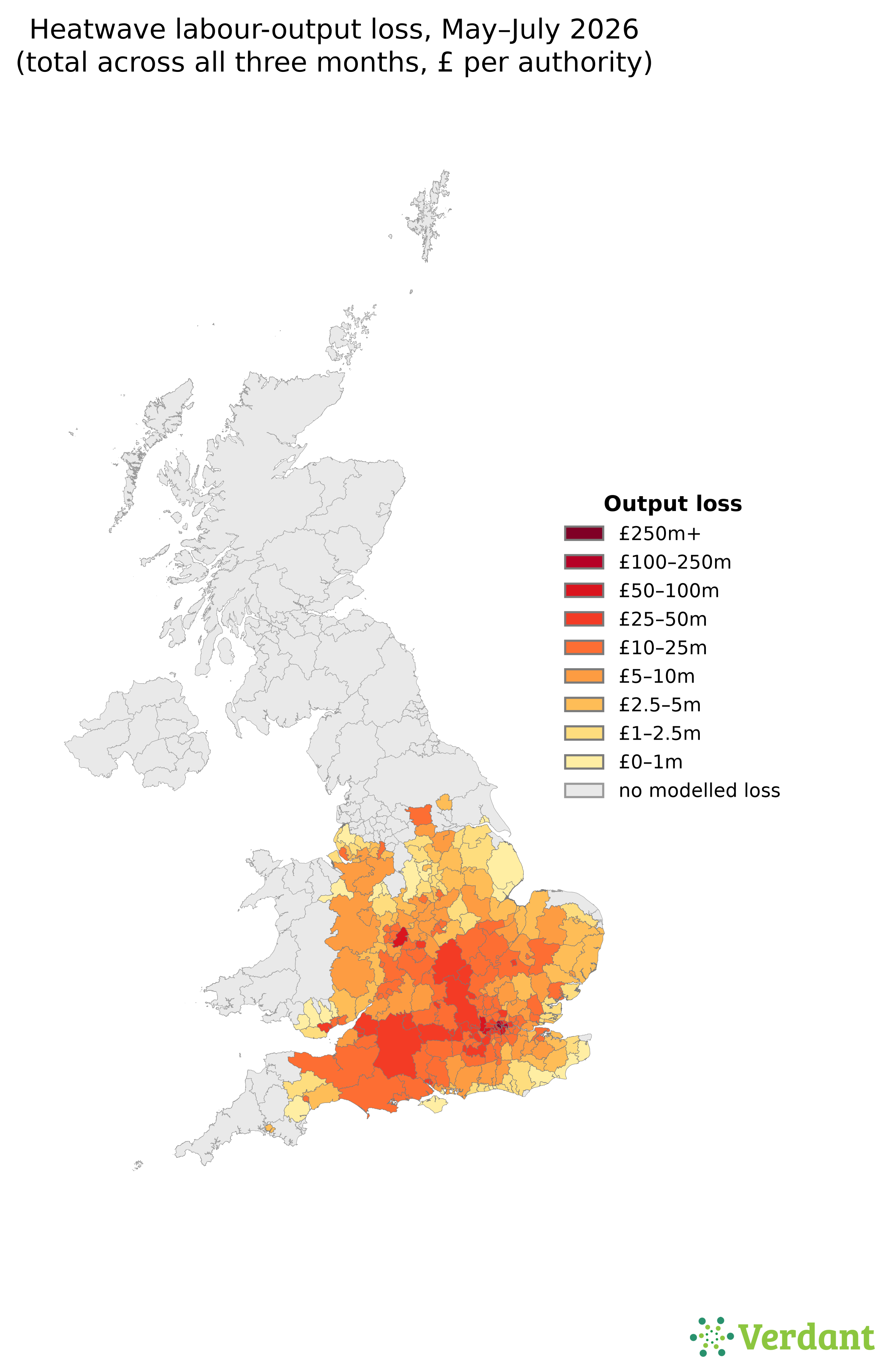
Heatwave labour-output loss, May-July 2026 (total across all three months, £ per authority) Credit: Verdant
This update covers the four heatwaves of summer 2026 to end of July, revising and extending Verdant’s earlier estimate of the cost of the June heatwave alone.
Successive heatwaves from May to the end of July 2026 have an estimated economic cost of at least £4.4bn. Previous estimates by Verdant placed the cost of the June 2026 heatwave alone at £2.36bn; this figure now includes all three heatwaves this year, from May to the end of July. May’s relatively minor event cost around £500m; July’s larger hit was £1.5bn, over two distinct peaks.
These losses are the result of reduced productivity due to the well-documented effect of all work becoming harder at higher temperatures, and that infrastructure and equipment overheat and fail. For each one degree Celsius temperature increase above 30 degrees in Europe, a 3% reduction in average output per hour has been observed. In a prolonged heatwave, these impacts add up to become significant economic losses. This is only the direct economic cost from productivity losses, and excludes things like losses from wildfires, or higher costs of energy for businesses and households.
If heatwaves keep intensifying at the rate seen over the last decade, we should expect at least £25.6bn in cumulative losses from summer heatwaves each year by 2030. Even this is likely to understate the true cost, since it captures only the direct hit to productivity. Knock-on effects on electricity costs and supply, along with broader macroeconomic ripple effects, would push the figure higher still. Nor does it include the terrible toll in health and lives lost.
To cut these economic losses and better protect workers, we recommend three measures:
a national maximum working temperature;
a national heat insurance scheme to protect the incomes of those unable to work during heatwaves, potentially financed by an Extreme Weather Levy on fossil fuel companies;
and investment in cooling and urban redesign, including greening urban spaces, to lessen the impact of extreme heat itself.