
Real progressive economic renewal, rather than gimmicks
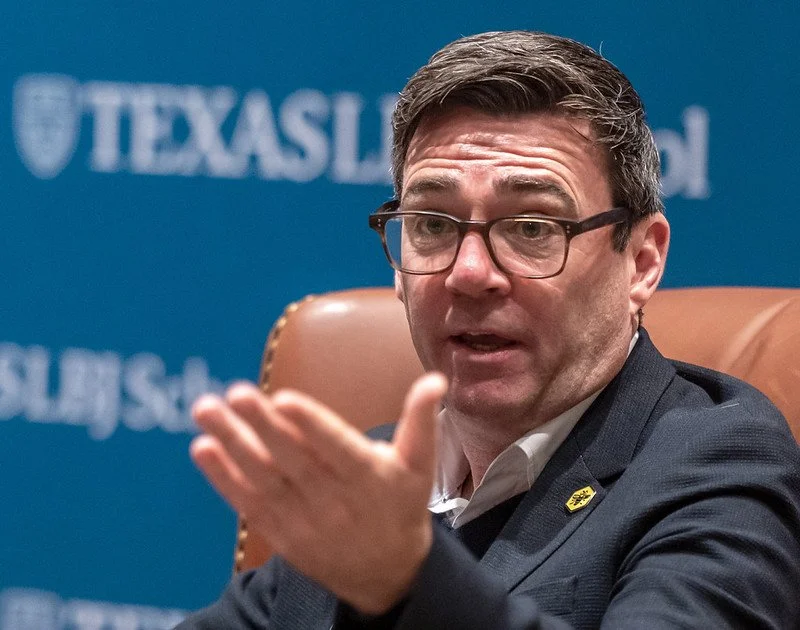
Andy Burnham speaking at LBJ Urban Lab. Flickr
Martin Edobor
As Andy Burnham approaches an all but certain entrance to Downing Street, it’s worth recalling his two big promises made at the start of his leadership campaign in Manchester two weeks ago. The first was the "biggest rebalancing of power our country has seen". That means shifting the centre of power from Westminster to Manchester, with a new Number 10 North and a pledge to devolve power to mayors and communities across England. The second was a commitment to stick to the existing fiscal rules. Both promises can't be kept. One of them is going to give.
Start with the numbers. In March, the OBR outlined that Rachel Reeves's plans left about £24 billion of headroom against the current budget rule by 2029/30. Economists now put it nearer £19 billion, and that was before anyone priced in a defence investment plan that NATO expects Britain to honour. Nearly £5bn of this is apparently left “unfunded”, even with cuts to investment programmes across other departments, and that sum will need to be found by Autumn Budget.
Set that against what Burnham says he wants to do, which, according to his policy team, includes housebuilding and tackling the social care crisis. The Health Foundation estimates adult social care in England needs an extra £3.4 billion a year by 2028/29 just to stand still, £6.4 billion to actually improve access, and £8.7 billion to pay care workers something closer to NHS rates. That's one service, in one nation of the UK, before a single brick of council housing is laid.
The IFS has already sketched how this ends: a first budget that sticks to current plans, then a rolling three-year target that shifts, consolidation that slides past the 2029 election, and hard choices that land on whoever governs in the early 2030s. Markets may tolerate that for a while. The public, however, is the one who will have to live with continued austerity.
I'd argue the constraint itself is the problem, and there are three things an incoming government could do differently.
First, change the fiscal rules so they properly distinguish between borrowing that builds assets and borrowing that pays for day-to-day spending. Treating a retrofitted council house the same as a consultancy invoice isn't prudent, it's just bad accounting. Louise Haigh has suggested allowing borrowing by the National Wealth Fund to take place outside of the government’s main budget constraint and this would be one, prudent route to allow extra investment in long-lasting assets.
Second, tax wealth. Labour’s 2024 manifesto pledge protects payslips, but it says nothing about capital gains taxed below income, or a modest annual levy on assets above £10 million, a proposal with broad public appeal. The Wealth Tax Commission found a one-off tax on millionaire households could raise £260 billion over five years. The money exists. It's just not in wage packets.
Third, build the industrial strategy around climate rather than bolting climate onto it. Grid upgrades, home insulation and public transport are the regional jobs programme Burnham says he wants. The North doesn't need a second Downing Street so much as it needs transmission lines, depots and training places, and those get built with money, not memoranda.
Burnham didn't take questions after his Manchster speech. He’s been tight-lipped about details of his plans, and the make-up of his Cabinet, since then. But crunch time is fast approaching.
Martin is chair of Verdant’s board.