
The Bank of England is a Glaring Hole in Andy Burnham’s Plans for the Economy
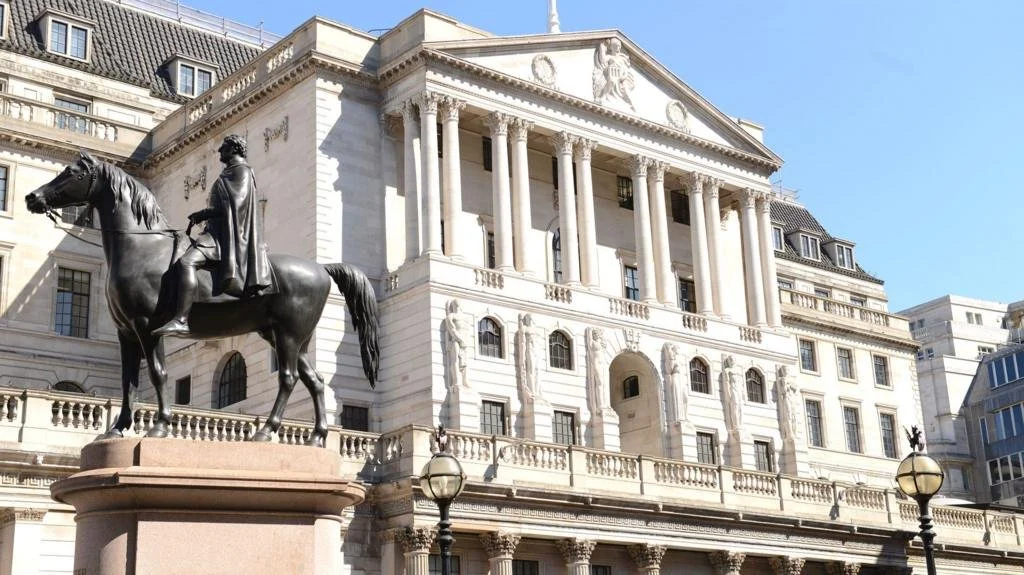
Photo credit: BBC
James Meadway
What are the real economic problems Prime Minister-to-be Andy Burnham faces? And will he take the bold action needed to address them? Economic sociologist Will Davies has written an invaluable account of the economic challenges facing Andy Burnham. In stark contrast to Burnham’s own account of our economic difficulties, he locates the start of our “present” (if not only) economic crisis in the aftermath of the Covid pandemic. Once a workable vaccine was available (from December 2020) and successfully rolled out over the following year, reopening from lockdowns could be swift; swift enough, in the end, to overwhelm supply chains that had been placed into abeyance for two years, and so cause inflationary snarl ups across this economy and much of the world as early as winter 2021.
In response, the Bank of England, like many other central banks, began jamming up interest rates from December that year. In February 2022, in contrast to many of the world’s other central banks, it also began a process of “Quantitative Tightening” (QT), or reversing the previous 13 years’ worth of Quantitative Easing (QE) by selling its vast holdings of UK government debt back into the financial market. That debt is nearly all in the form of bonds, which are promises by the government to pay a set amount over a set period of time to the bondholder. By selling these promises to pay, which for historical reasons are called “gilts” when they are UK government bonds, the government can raise money. The rate of interest is determined by how much the government has promised to pay. But, like in any other market, when demand for these gilts falls, the price falls. Because the government was now having to sell gilts at a lower price, but still making the same promises to pay on those lower priced gilts, the effective interest rate it faced rose. This is how the market for government bonds determines the cost of government borrowing, in the UK and across the world.
The cost of borrowing for the UK government, partly as a result of this, has remained appreciably above other, similar economies like France or Italy since early 2022, as critics like economist Daneila Gabor have argued. Freed of government oversight by the doctrine of central bank “independence”, considered sacrosanct since 1997, there has been little effective restraint or even scrutiny applied to the perverse decisions of the Bank and its pugnacious Governor, Andrew Bailey.
Bailey defended Quantitative Tightening last month as giving the Bank “the capacity to intervene again in future if needed.” In other words, he is privileging the Bank’s ability to act ahead of the elected UK government’s ability to act. He thinks that the Bank can impose significant costs on the government, and everyone who pays taxes to that government, or uses its services, so that it can (when it chooses to) do exactly the same thing in the future.
Those costs for everyone else are substantial. Not only are borrowing costs higher than otherwise, but the government is set to lose £125bn from its own budgets, with the money going not to public services but paid out instead to the Bank of England as a result of Quantitative Easing. These losses are happening because the Bank of England offers special accounts to commercial banks operating in pound sterling, and pays an interest rate on them – just like a normal bank account you or I might hold at a commercial, high street bank. QE was a process of the Bank of England creating more money to put in those commercial banks’ bank accounts, in exchange for their holdings of gilts, which, as we’ve seen, make payments to their holder – in this case, the Bank of England. As interest rates have risen, the Bank has to pay more to the commercial banks. But it still gets only the original payments on the gilts it holds. The result is a loss, which, under a 2012 agreement between Bank and government, overseen by then-Chancellor George Osborne, the Treasury has agreed to indemnify – paying the Bank of England, somewhat absurdly, for its own losses out of (in effect) our tax money.
But as Davies notes, this deliberate choice by the Bank to run QT fast, made against the British government and the wider economy, is only part of the post-pandemic economic malaise. If Covid was what Adam Tooze called the “first economic crisis of the Anthropocene”, the years since have started to reveal the economic impacts of the unsettled new period in the earth’s history. The early years of the Anthropocene are those where climate change impacts become real, unavoidable and repeated; and where conflicts over scarce raw materials, from rare earths to water, start to shape economic outcomes that affect us all.
The Bank of England can do little about this. Putting up interest rates in London will not cause cocoa harvests to recover in Ghana. They will not frighten the Iranian Revolutionary Guard Corps so that they reopen the Strait of Hormuz. They are at best, useless, and at worse, actively harmful: we need massive investment against the effects of climate change, something that Bank of England rate decisions help to make more costly. In the dangerous new world we have entered, there is little to nothing the Bank can actually do to seriously impact inflation, supposedly its core mission. And if it can do little, there is no point granting it more freedom to do more, uselessly. A revision to the Bank’s existing mandate from the government, changing the terms it operates on and the targets it sets, is sorely needed.
At least some in the Bank’s circles recognise this. Swati Dhingra is an external member of the Bank’s rate-setting Monetary Policy Committee who has done the most to caution against Baileyesque thinking. In an important speech last month, she spelled out the case with admirable clarity:
“Recent events in the Gulf are another reminder that inflation is often driven by forces beyond the reach of monetary policy. The recent rise in energy prices has once again exposed the vulnerability of economies to geopolitical shocks and the difficult choices they create for central banks.
“Increasingly, those shocks are linked to climate and energy systems. Dependence on fossil fuels, the physical impacts of climate change, and the policies required to decarbonise economies are no longer peripheral risks: they are all becoming more important determinants of inflation and macroeconomic stability.” (Swati Dhingra)
She notes, correctly, that “monetary tightening” (raising interest rates, in the first instance) can “slow the green transition through several channels.” And she concludes, again correctly, by calling for a “clearer allocation of responsibilities between monetary and fiscal authorities” over who has responsibility for the types of inflation we now face. In other words, since the Bank cannot do much about climateflation or geopolitical shocks, it falls to government (the “fiscal authorities”) to try and limit the damage – and build more resilience in the future, through investment in renewables and climate-proofing the economy.
As Davies notes, such thinking does not appear at all in Burnham’s, somewhat limited, recent pronouncements on the economy. His speech at the People’s History Museum, setting out his outline plans for government, was delivered in the middle of a record-breaking heatwave he referenced precisely not at all. Nor does the climate appear in the thinking of those close to Burnham, like Louise Haigh, whose recent Renewal article spelled out a detailed case for changes to how the “fiscal authorities” – rather than the Bank – should manage themselves. For all the talk from Burnham and others of “ending neoliberalism” and breaking with the past, they are still unprepared to re-examine the relationship between government and the Bank of England. Failing to do so will leave his government – and so all of us – at the continuing mercy of climate breakdown and geopolitical shocks. It is to be hoped, as Davies suggests, that in response to events Burnham will be prepared to “get his hands dirty doing progressive politics”.