
Why price caps are a fair response to the rising cost of food
UK supermarket
By Deborah Doane and James Meadway
Extreme heat over this summer, the soaring costs of fuel and fertiliser, and the near-certainty of a record-breaking El Nino event are combining to produce what forecasters anticipate will be a surge in the price of food globally, and a further turn of the ratchet in the UK’s cost of living crisis.
Andy Burnham tried to address rising costs of energy bills when he first became Prime Minister by offering to cut VAT on energy bills. This cut secured a meagre £40/year off energy bills - which are already set to rise by another 3.6% in October, wiping out any gains from the VAT cut.
Housing presents another challenge. Though a threat of rising interest rates and a change to council tax has already put a significant dent into the housing market, this does little to impact those on the lowest incomes. The Green Party’s Zack Polanski more radical offering of rent controls would do far more for ordinary people, as our own research has shown, potentially saving renters in London, for example, over £500 per year.
Rising food prices
However, the area that people feel the most sensitive to is rising food prices. And it’s the one aspect of cost of living that seems to be the most intractable. Food inflation has been a regular feature since the Ukraine war, rising 40% between 2021 and Spring 2026, and having added £1,100 to the average household food bill in that period. And after this summer’s extreme heat wave, and the predicted effects of the super El Nino, it is set to be a feature again, with expectations of failed harvests and further cost increases as a result of the Iran war. Adding to the pressure is the fact that the UK now has a significant trade deficit of £21 Bn in food and drink, relying more on imports than ever before.
Rachel Reeves, the former Chancellor, was systematically rebuffed by supermarkets when she asked them to control food prices earlier this year, with the M&S Chief executive calling her idea ‘preposterous’. She immediately backed away. But Burnham and the Treasury would do well to reconsider this position at a time when the impacts of cost of living are falling most on those least able to bear the brunt of the rises.
Major food retailers continue to make a substantial profit
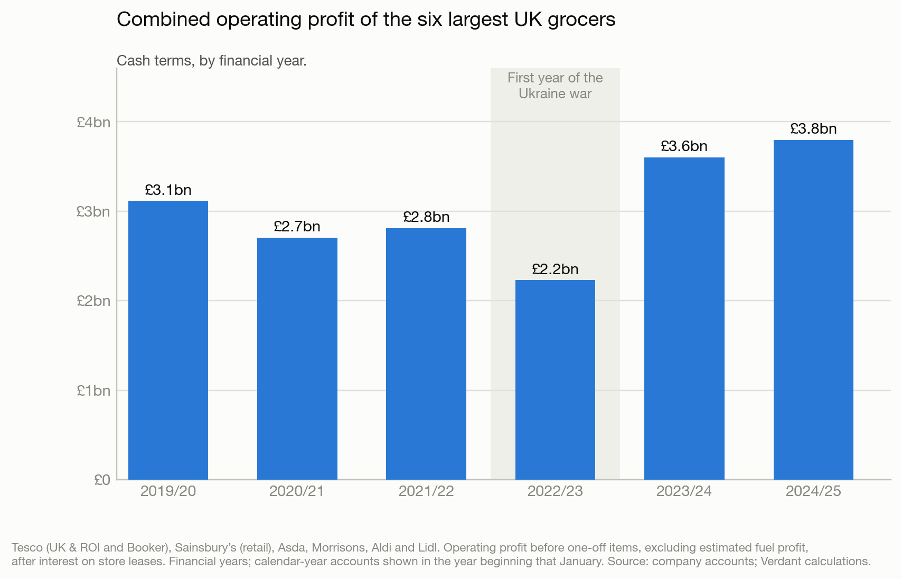
But whilst margins in food retail are small, with just six major operators covering 87% of the market, total profits are substantial. And when costs of production have surged in the last few years, notably with Russia’s invasion of Ukraine in 2022, the major retailers have been able to open up those margins and make even bigger profits. Using the retailers’ own accounts, we’ve been able to demonstrate this effect on their margins and total profits.
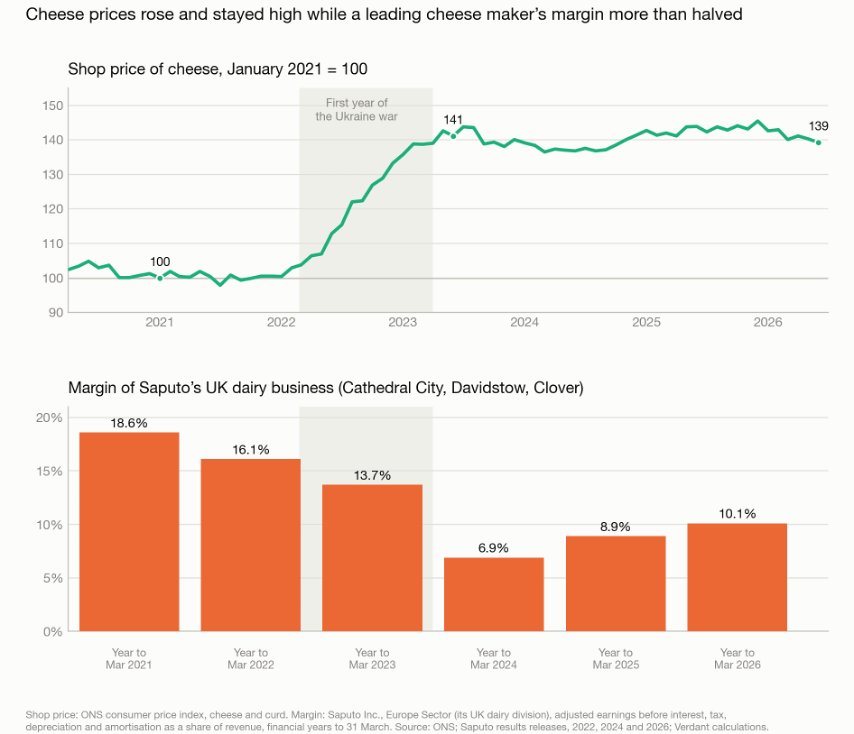
You can see this effect on specific products. The price of cheese, for example, soared over 2022, and has not come back down. But the profit margins of the producers of the cheese have fallen. The margin of Saputo's UK business, which makes Cathedral City cheddar, more than halved between 2022 and 2024.
Farmers fared even worse. In 2022, fertiliser prices tripled. And whilst the price paid to dairy farmers did rise at the time it fell back almost as fast again in 2023. And it has fallen steeply since 2025, with farmers barely covering their costs of production – if at all. The industry has said that the wholesale price of cheddar fell by more than a quarter during 2025, with industry analysts saying that over the past year, the money flowing through the dairy chain has risen whilst the amount reaching farmers has fallen.
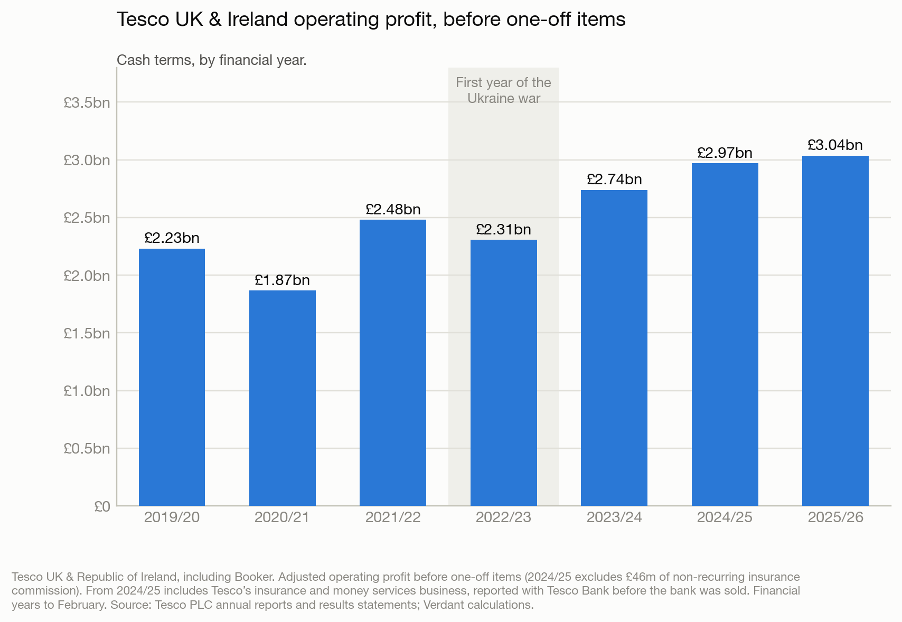
The mechanism is clear: global shocks to supplies drive prices upwards. But it’s the major food retailers here, and not farmers or manufacturers, who continue to make a substantial profit, even in tough times. Tesco’s profits, for example, have surged above £3bn in the last year alone.
Lessons from other countries
Price controls are a common intervention in other European countries. In Greece, for example, a policy requires large supermarkets to offer a basket of essentials - like bread, rice, dairy and eggs - at a reasonable price, fixing the margins they can earn. Supermarkets are still allowed to earn a profit, just not an exploitative one. Hungary has a similar requirement.
So why not here in the UK? Market orthodoxy says that price controls are a bad idea. It’s argued that they create perverse incentives and create more shortages. This (mis)analysis leads to the Canadian style response, which is just giving a direct payment to consumers to deal with higher prices.
But the reality is that we already have shortages and supermarkets are already responding by imposing solutions like ‘shrinkflation’. And even when their costs fall, we know that supermarkets keep prices high, which is why the cumulative food inflation – as measured over a number of years – is at 40%. Giving a direct payment to consumers risks fuelling even higher prices, not lowering them.
A model that is fair for all
We should be considering modest price caps on a basket of healthy goods, including on food that is grown here in the UK, and we need to agree a fair price for manufacturers and farmers too. Modest price caps on supermarket margins can ensure that the burden of rising food prices is equally shared across the supply chain and in consumer’s pockets.
PM Andy Burnham has some choices to make. He’s facing pressure from the Treasury and more handouts won’t be workable for him. And though our food system clearly needs a wider overhaul to deal with the major challenges we face, from climate change to trade deals, this will do little to help in the short-term. In the meantime, however, everyone needs to play their part. And if it means capping supermarket prices and profits, in order to share the burden imposed by external shocks, then that seems right and fair for all.